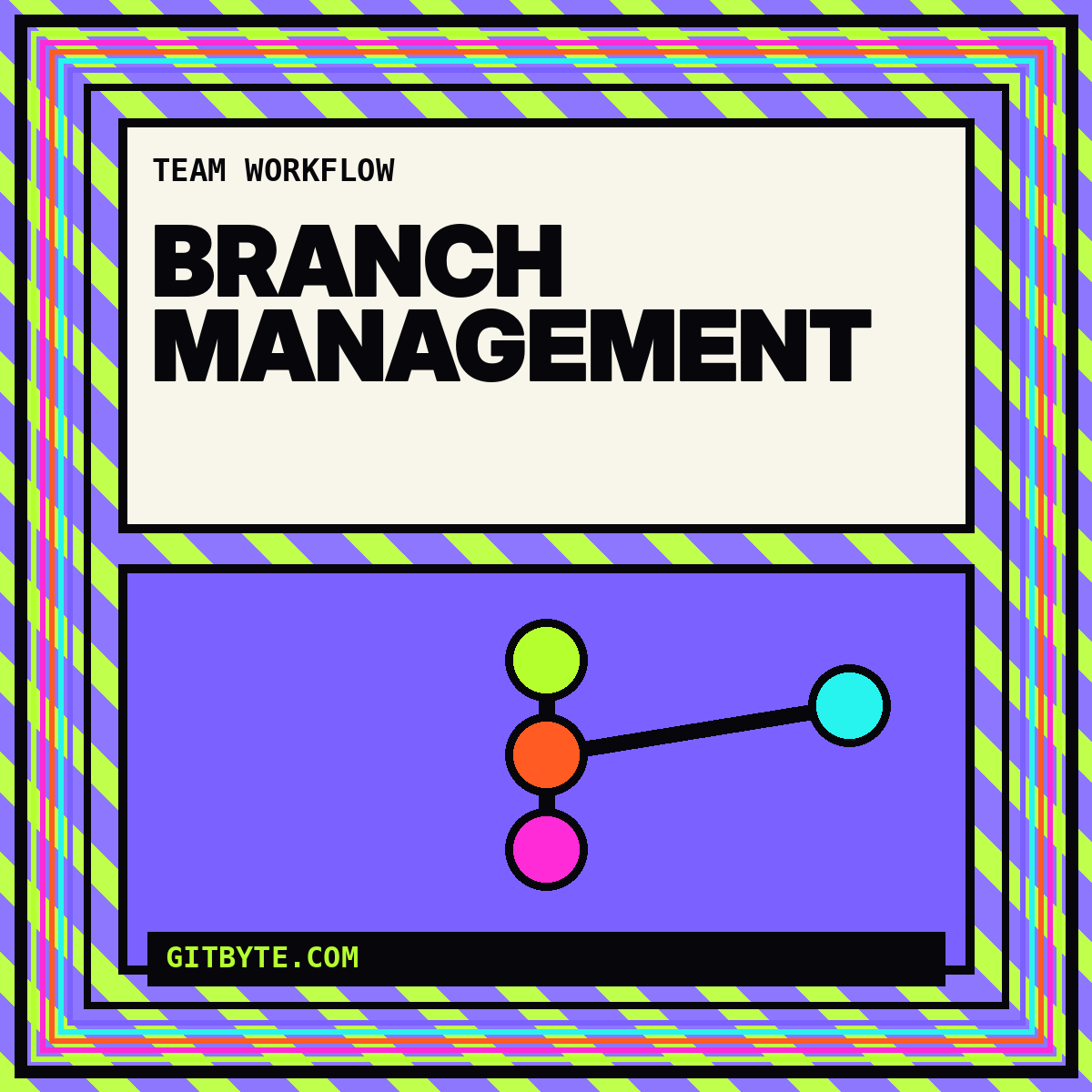
Branch management is the practice of controlling how lines of development are created, updated, reviewed, released, and removed. A branch model should help a team coordinate change without turning the repository into a map that only a few people understand. The best strategy is usually the simplest one that supports the team’s release cadence, testing constraints, and risk profile.
Most branch problems are not caused by Git commands. They come from unclear ownership, long-lived divergence, inconsistent merge rules, and work that is too large to integrate safely. A good policy therefore describes behavior: when to branch, how long a branch should live, what must pass before merge, and who can modify protected references.
Begin with the integration branch
Every workflow needs a place where completed work comes together. For many teams, that is the default branch, often named main. Keeping it releasable or close to releasable reduces uncertainty because everyone can see the current integrated state. Feature branches are short-lived workspaces that merge back after review and checks.
Other teams use a separate integration branch because releases require extended certification or because multiple supported versions must move independently. That can be valid, but each additional long-lived branch creates synchronization work. Define which branch is authoritative for new development, which branches receive fixes, and how changes move between them.
The Git book’s overview of branching workflows describes common patterns and the role of topic branches. Use those patterns as building blocks, not as rigid prescriptions. Your workflow should reflect how the product is actually delivered.
Prefer short-lived topic branches
A topic branch should represent one coherent feature, fix, or maintenance task. The longer it remains separate, the more assumptions it accumulates about code that other people are changing. Frequent integration keeps conflicts small and exposes incompatible decisions while they are still inexpensive to resolve.
Set expectations in elapsed time rather than a hard line count. A branch that is open for a day may still contain a large generated change, while a tiny branch can remain risky if it depends on weeks of hidden work. Track age and inactivity as prompts for conversation, not automatic evidence of poor performance.
When a task cannot be completed quickly, divide it into compatible slices. Introduce an interface before its implementation, add a dormant code path, migrate one caller at a time, or use a feature flag. GitByte’s guide to byte-sized commits shows how to preserve understandable steps inside each review.
Protect important references
The default branch, release branches, and deployment tags should have explicit protection. Common controls include blocking force pushes, requiring review, requiring status checks, limiting deletion, and restricting who can create or move release tags. Apply the strongest rules to references that trigger production or package publication.
Protection should not depend on tribal knowledge. Configure it centrally where possible and keep policy changes auditable. Document an emergency path for incidents when the normal checks are unavailable or too slow. Emergency access should be limited, logged, and reviewed after use.
Do not assume administrators are harmless. A broad bypass permission can erase the practical value of branch rules. Separate routine repository administration from exceptional policy override, and review who holds each role.
Choose a merge strategy deliberately
Merge commits preserve the branch boundary and show when a set of commits entered the target branch. Rebase-and-merge creates a linear history while preserving individual commits. Squash merging creates one target-branch commit from the entire review. Each strategy changes how history is read and how reverts behave.
Use merge commits when the relationship between a topic and the integration branch is valuable. Use rebase when individual commits are carefully structured and a linear log matters. Use squash when review branches contain work-in-progress commits or when the team wants one revertable unit per merge request.
Consistency is more important than fashion. If a repository allows every method, explain when each is appropriate. Otherwise, future maintainers may see a mixture of histories that require different investigation techniques. The merge request and code review guide connects merge strategy to review quality and commit preparation.
Handle release branches with a clear purpose
Release branches are useful when a version must stabilize while new development continues, or when several supported versions need independent fixes. They are costly when created automatically and kept forever. Define entry criteria, allowed changes, ownership, and an end date.
Apply fixes to the earliest appropriate branch, then propagate them forward through merge or cherry-pick according to a documented rule. Avoid independently reimplementing the same fix on multiple branches. Record the source commit so auditors and maintainers can trace the relationship.
Tags should identify immutable release points. If a release must be corrected, create a new version rather than silently moving a published tag. Signed or protected tags can strengthen provenance when the release process depends on them.
Use trunk-based development when integration speed matters
Trunk-based development emphasizes very short branches or direct changes to a protected trunk, strong automated checks, and incomplete functionality hidden behind flags or compatible interfaces. It reduces merge drift and supports frequent delivery. It also requires discipline: fast tests, small changes, reliable review, and a safe way to disable unfinished behavior.
Feature flags are not free. They add states that need testing and cleanup. Give every temporary flag an owner and removal condition. Separate deployment from release so code can be integrated without exposing it to all users immediately.
A team should not claim trunk-based development while branches remain open for weeks. The label matters less than the feedback loop. Measure how quickly a change reaches the integration branch and how often conflict or review delay interrupts that flow.
Manage stacked and dependent changes
Sometimes a feature naturally forms a sequence of dependent reviews. Stacked branches can keep each review small, but they add coordination when an earlier layer changes. Make the dependency order explicit and avoid merging a later branch before its base is stable.
Rebase dependent branches carefully and use tools that preserve review context. Reviewers should know which diff to evaluate and which commits belong to upstream work. Once the base merges, retarget or update the next branch promptly so the platform displays an accurate comparison.
For long sequences, consider whether stable intermediate interfaces can reduce dependency. A small foundational merge followed by independent callers is easier to coordinate than a deep stack where every layer waits on the previous one.
Establish naming and lifecycle conventions
Branch names should be readable, safe for automation, and useful in logs. A compact convention might include a type and a short topic, such as fix/token-expiry or feature/repository-export. Ticket identifiers can help when they are stable, but the name should not be meaningless without the tracker.
Delete merged topic branches automatically or during routine cleanup. Old remote branches create uncertainty about active work and can trigger unnecessary builds. Before deleting an unmerged branch, verify ownership and whether unique commits need preservation.
Use archival labels or repository notes for intentionally paused work rather than leaving branches unexplained. If a branch is expected to remain long-lived, document why and who is responsible for keeping it synchronized.
Align CI/CD with branch purpose
Not every branch requires the same pipeline. A topic branch may run fast tests and static checks, while the default branch adds integration tests and release packaging. Release branches may run certification jobs, and tags may trigger publication. The rules must be visible and tied to immutable commit identifiers.
Avoid using branch names as the only security boundary. A malicious change can target a trusted name if permissions are weak. Combine protected references, reviewed workflow files, and isolated credentials. GitByte’s CI/CD integration guide covers this trust boundary in more detail.
Keep required checks stable enough that developers understand what merge readiness means. Conditional checks are useful, but the platform should show why a check applies and what action is needed.
Review the policy using operational evidence
A branch strategy should be revised when it creates recurring delay or risk. Useful signals include branch age, time from first commit to merge, conflict frequency, revert difficulty, and the number of emergency overrides. Interpret those signals with context; they describe the system, not the worth of individual developers.
Discuss examples in retrospectives. Which branch stayed open too long, and why? Which release fix was hard to propagate? Which protection rule prevented a mistake or blocked a legitimate incident response? Turn those lessons into clearer defaults and automation.
Conclusion
Effective branch management keeps the shared history understandable and integration frequent. Start with one clear integration branch, protect important references, prefer short-lived topics, and add release or stacked branches only for defined needs. Choose merge behavior intentionally and connect branch rules to CI/CD and review. GitByte.com’s branch management resources can help teams turn these principles into a lightweight repository policy.